
Minimalist Nursery Setup for New Parents: A 2026 Guide
Table of Contents
- What a Newborn Actually Needs in a Minimalist Nursery Setup
- Essential Versus Nonessential Nursery Items
- Creating a Newborn Nursery Checklist for Your Space
- Small Nursery Ideas for Limited Space
- Budget-Friendly Baby Nursery Setup Without Compromise
- Nursery Organization Ideas That Actually Work
- A Staged Timeline: Before and After Baby Arrives
- How Nursery Needs Change as Your Baby Grows
- Frequently Asked Questions
Last Updated: October 11, 2026
What a Newborn Actually Needs in a Minimalist Nursery Setup
A minimalist nursery setup for new parents strips away the excess and focuses on what truly matters: safety, accessibility, and comfort. This approach helps you avoid the trap of buying dozens of items you'll never use while ensuring your baby has everything necessary for healthy sleep and care.
The core principle is simple: a newborn needs a safe sleep space, a changing station within arm's reach, and organized storage for essentials. Everything else is negotiable.
Sleep space and safe sleep essentials
Your baby's sleep setup is the foundation of a minimalist nursery setup. The American Academy of Pediatrics safe sleep guidelines recommend a firm, flat surface in the parents' room for at least the first six months. A bedside bassinet like the Shnuggle Air Lite Bedside Bassinet ($295) bridges this perfectly, it attaches securely to your bed, eliminates midnight stumbling, and transitions easily as your baby grows.

For the mattress, you need one firm, well-fitting option. Skip the multiple mattress pads and decorative bedding. A single breathable mattress with a fitted sheet is all that's required. Bumpers, pillows, blankets, and stuffed animals have no place in a newborn's sleep space, they increase suffocation risk (Sleep-Related Infant Suffocation Deaths Attributable to Soft Bedding, Overlay, and Wedging).
A sleep sack or wearable blanket replaces loose bedding entirely.
Changing and diapering station basics
Set up one dedicated changing station rather than scattering supplies throughout the room. A small dresser with a changing pad on top works perfectly in a tight space. The Beige White Baby Crib Diaper Caddy Storage Organizer ($24.99) attaches directly to your crib or bassinet, keeping diapers, wipes, and essentials within arm's reach during nighttime changes.

Stock this station with: diapers (one size to start), wipes, diaper cream, and a small waste bin. That's genuinely all you need. Fancy organizers and decorative baskets add clutter without function.
Storage and accessibility
Accessibility matters more than aesthetics in a minimalist setup. Store frequently used items, diapers, sleepers, swaddles, at eye level and within one step of your changing station. Reserve higher shelves for items you'll use less often, like seasonal clothing or backup supplies.
One small dresser handles all of this. Avoid the temptation to buy multiple storage units. If items don't fit in one dresser and your crib storage, you have too much.
Essential Versus Nonessential Nursery Items
This distinction saves money and mental energy. Essential items keep your baby safe and allow you to handle daily care efficiently. Nonessential items are tempting but create clutter without adding real value.
Essential items:
- Safe sleep surface (crib, bassinet, or bedside sleeper)
- Firm mattress with fitted sheets
- Sleep sacks or wearable blankets
- Diapers and wipes
- Changing pad
- Basic clothing (sleepers, socks, hats)
- Diaper disposal system
- One comfortable chair for feeding and soothing
Nonessential items that most guides push:

- Decorative mobile (babies don't need visual stimulation to develop)
- Blackout curtains (helpful but not essential, a simple shade works)
- White noise machine (calming but not required)
- Humidifier (useful in dry climates but not universal)
- Nightlight (your phone's flashlight function suffices)
- Theme-coordinated bedding sets (waste of money, you'll change sheets constantly)
- Dozens of decorative elements (they collect dust and stress you out)
The nonessential items aren't bad, they're just not necessary for a functional nursery.
Creating a Newborn Nursery Checklist for Your Space
A checklist grounded in your actual space prevents over-buying. Start by measuring your room. Measure doorways, the wall where the crib will go, and the space available for a dresser or changing station.
Measurement checklist:
- Room dimensions (length × width)
- Doorway width
- Available wall space for crib
- Space for a dresser or changing table
- Window placement (for natural light)
- Outlet locations (for a lamp or white noise machine)
Next, list what you already own. Many parents inherit or receive hand-me-down furniture. If you have a dresser, you don't need to buy one.
Finally, create a priority list based on your room's constraints. In a small space, a multifunctional dresser-changing station is priority one. In a larger room, you might add a comfortable chair sooner.
Small Nursery Ideas for Limited Space
Small spaces demand strategy. The goal is functionality without cramping. Most small nurseries work best with one focal point, the crib, and everything else arranged around it.
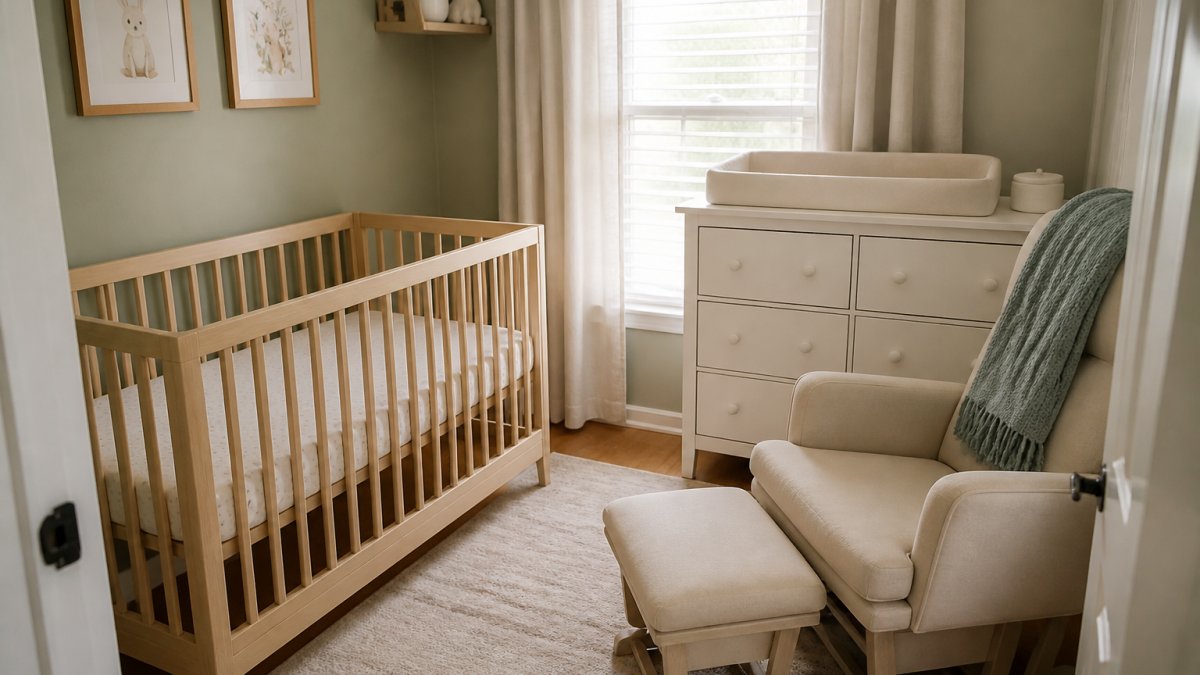
Multifunctional furniture that saves space
A dresser that doubles as a changing station is the gold standard for small rooms. Add a changing pad on top, and you've eliminated the need for a separate changing table.
A Comfortable High-Quality Upholstery Glider Rocking Chair ($288.98) fits into a corner and serves multiple purposes: feeding, soothing, and nighttime comfort during those early weeks.
Vertical storage, wall-mounted shelves or over-the-door organizers, keeps the floor clear and makes the room feel larger. A single shelf above the dresser holds backup diapers and supplies without taking up floor space.
Shared room and co-sleeping setups
If your baby shares your room initially, a bedside bassinet like the Shnuggle Air Lite eliminates the need for a separate crib in the nursery during those early months. Later, when your baby transitions to their own room, you move the crib in. This staged approach is both practical and budget-friendly.
For families co-sleeping long-term, a minimalist nursery becomes a backup sleep space and play area rather than the primary bedroom. In this case, focus on a safe sleep surface, changing supplies, and storage for clothing and gear. A comfortable chair becomes optional.
Budget-Friendly Baby Nursery Setup Without Compromise
You don't need to spend thousands. A functional, safe minimalist nursery setup costs significantly less than a decorated showroom.
| Item | Budget Option | Premium Option | Necessity |
|---|---|---|---|
| Sleep surface | Basic crib ($150-200) | Bedside bassinet ($295) | Essential |
| Mattress | Standard firm ($80-120) | Organic/eco ($150-200) | Essential |
| Changing surface | Dresser + pad ($100-150) | Dedicated table ($200-300) | Essential |
| Chair | Basic glider ($200-250) | High-end rocker ($400+) | Helpful |
| Storage | One dresser ($150-200) | Multiple units ($500+) | Essential |
| Crib organizer | Cotton caddy ($25) | Premium organizer ($60) | Helpful |
| Lighting | Lamp + phone light ($20) | Smart light ($80+) | Optional |
The budget option for each category is genuinely sufficient. A basic dresser functions identically to an expensive one. The difference is aesthetics, not performance.
Beige White Baby Crib Diaper Caddy Storage Organizer Nursery Room →
Where to save: skip theme-coordinated bedding sets, decorative wall art, and specialty furniture. Where to invest: a safe, comfortable sleep surface and a chair where you'll spend hours feeding and soothing your baby.
Nursery Organization Ideas That Actually Work
Organization in a minimalist nursery is about accessibility and visibility. If you can't see what you have, you'll buy duplicates.
Use clear containers for items you use frequently. Label everything, diapers, wipes, sleepers, so caregivers (partners, grandparents, babysitters) know exactly where things are.
Keep nighttime essentials within one arm's reach of where you'll be sitting or standing. The Beige White Baby Crib Diaper Caddy Storage Organizer solves this by hanging directly on your crib.
Rotate seasonal clothing. Newborns grow quickly. Store 0-3 month sizes in your active dresser and keep 3-6 month and 6-12 month sizes in a bin elsewhere.
A Staged Timeline: Before and After Baby Arrives
Preparing everything at once creates overwhelm.
Eight weeks before due date: Set up your sleep surface (crib or bassinet) and mattress. Test it.
Four weeks before: Assemble your changing station. Install the changing pad on your dresser or table. Stock diapers, wipes, and diaper cream.
Two weeks before: Add your chair. Sit in it for 20 minutes. Is it comfortable?
One week before: Do a final walkthrough. Can you navigate the room safely in dim light? Are all cords secured?
After baby arrives: Resist the urge to buy more. Live with your setup for two weeks before adding anything.
How Nursery Needs Change as Your Baby Grows
A minimalist nursery evolves with your baby. What works for a newborn won't work for a 6-month-old or a toddler.
Newborn (0-3 months): Your setup is perfect as-is. The focus is safe sleep and efficient diaper changes.
3-6 months: Your baby becomes more aware of their environment. A simple nightlight or soft music might help them settle.
6-12 months: Your baby may transition to their own room fully.
12+ months: Toddlers need more floor space for play.
The beauty of starting minimal is that you add only what your baby actually needs at each stage.
Creating a minimalist nursery setup for new parents requires clarity about what matters most: safety, accessibility, and your family's peace of mind. Our Shnuggle Air Lite Bedside Bassinet, Beige White Baby Crib Diaper Caddy Storage Organizer, and Comfortable High-Quality Upholstery Glider Rocking Chair are thoughtfully designed to support your everyday journey without excess.
Frequently Asked Questions
What does a newborn actually need in a minimalist nursery setup?
A newborn needs a safe sleep space (crib or bassinet), a changing station, storage for essentials, and a comfortable place for caregivers. The Shnuggle Air Lite Bedside Bassinet serves double duty as both a sleep space and bedside companion, while a simple dresser with a changing pad handles diaper changes. Add a crib organizer like our Beige White Baby Crib Diaper Caddy to keep bottles, diapers, and wipes within arm's reach. Skip the decorative items, extra furniture, and toys, newborns don't need them.
How do you organize a small nursery with limited storage?
Vertical storage is your best friend in a small nursery. Use wall-mounted shelves above the changing station, drawer dividers in dressers, and a crib caddy to store items directly on the crib frame. Our Beige White Baby Crib Diaper Caddy (16" x 10" with 6" deep pockets) keeps essentials organized and accessible. Label everything so you can find items quickly during night changes. Keep only what you actively use in the room; store seasonal clothing and extra supplies elsewhere.
What should you leave out of a minimalist nursery?
Skip the decorative mobile (unless it serves a soothing purpose), excess furniture, coordinated bedding sets, wall art collections, storage bins you don't need, and toys. Newborns don't play with toys or appreciate decor. Avoid furniture that serves only one purpose, choose pieces that multitask. Don't buy items 'just in case.' If you need it later, you can add it then. This approach keeps costs down and your space calm.
How can new parents set up a nursery on a budget?
Buy only essentials: a safe sleep space, changing surface, storage, and one comfortable seating option. Choose a bedside bassinet like the Shnuggle Air Lite ($295) instead of separate crib and bedside sleeper. Use a dresser as your changing station with a pad on top rather than a dedicated changing table. Invest in one quality glider chair ($288.98) for nighttime comfort. Add storage with affordable organizers like our crib caddy ($24.99). Buy secondhand furniture when possible and skip decorative items entirely.
Can you create a minimalist nursery in a shared bedroom?
Yes. Use a bedside bassinet that attaches to your bed so your baby sleeps near you without taking up floor space. Choose a compact dresser for changing and storage. A glider chair can double as seating for you during the day. Keep the color palette neutral and calm. Store items vertically to maximize space. A shared room actually encourages minimalism because you have no choice but to be intentional about what stays in the space.
What's the safest sleep setup for a minimalist nursery?
Follow current safe sleep guidelines: a firm, flat sleep surface (crib, bassinet, or play yard) in your room for at least the first six months. Use a fitted sheet only, no pillows, blankets, bumpers, or soft toys. Keep the room at a comfortable temperature. A breathable mattress like the one in the Shnuggle Air Lite Bassinet helps regulate temperature. Avoid co-sleeping on couches or soft surfaces. These practices reduce the risk of sudden infant death syndrome while keeping your setup simple and clutter-free.
How do nursery needs change as a baby grows?
Newborns need a safe sleep space and changing station. By 4-6 months, babies become more aware and may benefit from a soft light or gentle mobile for comfort. Around 6-12 months, you'll add toys for play and development. As toddlers emerge, you'll need lower storage they can access, a transition bed, and safety gates. A minimalist approach means you add items only when your child's development genuinely requires them, not before.